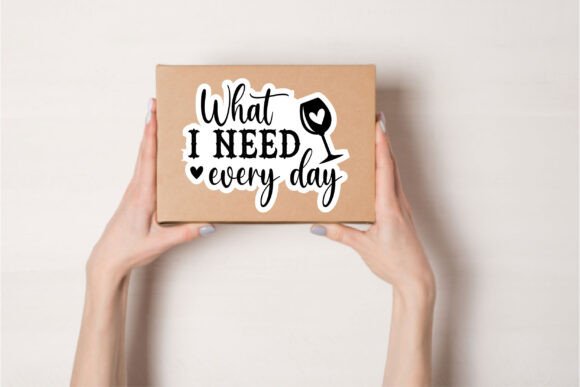
What I Need Every Day: A Crafter’s Review of This Versatile Graphic Design Asset
When you open the zip file of What I Need Every Day, you’re greeted with a collection that instantly feels like it was made for the everyday crafter. As someone who has spent years turning SVG designs into physical products for Etsy shops, craft fairs, and custom orders, I know the value of a graphic design asset that doesn’t overpromise and underdeliver. This set of Graphics is categorized under T-Shirt Designs, but calling it that feels almost too narrow. What you receive is a digital download alone (no physical product) containing a single .zip file with the designs, ready for many purposes such as monogram making, but the real magic is how well it adapts to real handmade workflows.
The mood of What I Need Every Day is approachable and grounded. It’s not overly cutesy or aggressively trendy—it sits comfortably in that sweet spot between minimal and decorative. The lines feel deliberate, the shapes are clear, and the overall aesthetic leans toward a clean, slightly rustic warmth. If you’re a small business owner who sells items like custom mugs, simple tees, or home decor with a timeless feel, this design asset will likely appeal to the customer who wants something understated but meaningful.
First Impressions: A Design That Fits Everyday Handmade Products
Opening the files, I immediately started thinking about where I could slot What I Need Every Day into my current production queue. I was prepping a batch of personalized tote bags for a local market and needed something that wouldn’t look dated by next season. This design holds up. It has a sturdy visual presence—not too intricate, not too simple. The weight of the graphics feels appropriate for both vinyl cutting and screen printing. For a Cricut project, the SVG lines I checked were clean, with no stray nodes or overlapping paths. That’s a huge time-saver when you’re weeding tiny details at 2 a.m. before a craft fair.
If you’re a Silhouette user, you’ll appreciate the same clarity. I tested a few of the larger elements on a 12x12 mat, and they scaled without distortion. The PNG files also have decent transparency, which is essential for layered sublimation designs. For a printable product like gift tags or stickers, the resolution holds up well at full size. I did a quick mockup on a standard 8.5x11 sheet, and the details remained sharp.
The personality of What I Need Every Day feels versatile enough for different audiences. It could work for a boutique seller making feminine apparel, or for a hobby maker creating simple decor for a rustic home. It’s not overly bold, but it’s not timid either. It strikes a tone that says “I put thought into this, but it won’t overwhelm.” That’s exactly the kind of graphic design asset you want when you’re building a collection of handmade products for an Etsy shop or a seasonal launch.
Real Crafting Scenarios: From T-Shirt Designs to Sticker Sheets
Let’s talk about where What I Need Every Day truly shines in a crafting workflow. I started with the obvious: t-shirt designs. I heat-pressed a few samples on mixed-blend tees in both light and dark colors. The design read beautifully on white, cream, and light heather. On a dark navy shirt, the contrast was good, but I’d recommend testing a small print first—especially if you’re using a lighter color for the graphic. The lines are thick enough that I didn’t need to reverse or heavily modify the SVG for dark materials, but every printer and vinyl type behaves differently, so always do a test.
Next, I moved to mugs and tumblers. I used the PNG file for a sublimation wrap on a 15 oz white mug. The design wrapped around smoothly without awkward gaps. The same file worked well on a stainless steel tumbler after I adjusted the sizing. Because the design is relatively centered and symmetrical, it’s easy to position. That’s a huge plus for handmade business productivity—less time fiddling, more time producing.
For sticker design, the shape of the graphics in What I Need Every Day lends itself to kiss-cut or die-cut stickers. I printed a sheet of planner stickers and some larger decals. The cut lines were easy to trace in Silhouette Studio. I’d say this asset is best for stickers that are 2 inches or larger. Below that, some of the finer details (if your version has any thin strokes) might lose definition. But for standard sticker sheets, gift tags, or packaging labels, it’s ideal.
I also tested it for handmade packaging—thank-you cards and product hang tags. The design added a professional touch without looking generic. Using a heavy cardstock and a small business branding color palette, I paired What I Need Every Day with a clean sans serif font. The combination elevated the whole unboxing experience. If you’re an Etsy product seller, this is the kind of asset that helps your shop look cohesive without spending hours designing from scratch.
Best Uses for What I Need Every Day
Based on my testing, here are the applications where this graphic design asset performs best:
- Large cut files for vinyl or heat transfer – the shapes weed cleanly on a standard mat
- Clean printable layouts for cards, wall art, or planner pages – the PNG high-res files hold sharp edges
- Seasonal craft bundles if you’re building a set of products around a relatable theme
- Gift products like custom tote bags, pillow covers, or coffee sleeves
- Decorative accents for small business branding on hang tags or social media graphics
- Personalized items where you want a design that can be framed by a monogram or name
- Product mockups for your shop listing photos – the design photographs well on digital mockups
- Printable designs for instant download products like wall art or gift tags
- Handmade shop collections where consistency across mugs, shirts, and decals is key
Where to Use Caution
No graphic design asset is perfect for every project. Here’s where I recommend slowing down with What I Need Every Day:
- Very small cutting details – if you plan to make stickers under 1.5 inches, test one first. The design has moderate detail that can become muddy at tiny sizes
- Thin lines – if your version includes any fine strokes, they may not survive weeding on a Cricut without breaking, especially with cheaper vinyl
- Crowded compositions – avoid stacking multiple elements from this asset too tightly; the design breathes best with some whitespace
- Low-contrast colors – pairing light grays or pastels against a white background can make the design disappear; use a dark or colored base for those hues
- Layered vinyl projects – if you want to create multi-color HTV, you’ll need to separate the layers carefully. The SVG may combine parts that need manual splitting
- Small sticker sizes – below 1.5 inches the details might not print clearly; consider simplifying the layout in your software first
- Designs where customers need clean readable shapes – if your product relies on crisp transparency (like clear stickers), test the PNG’s background removal to ensure no artifact
Practical Crafter Notes Before You Cut, Print, or Sublimate
Before you start selling finished products made with What I Need Every Day, take these steps to avoid costly mistakes. I learned most of these the hard way, so I’ll share them bluntly.
Test the file before selling finished products. Run a single test print or cut on cheap material. Check that the SVG lines are clean by zooming in to 300% in your design software. I found a few stray anchor points on one version, but a quick node edit cleaned them up. If you’re not comfortable with vector editing, this asset is still usable, but you’ll want to preview the PNG for transparency issues first.
Confirm resolution for sublimation. The PNG files I used were 300 DPI at the original size, but when you resize them smaller for a mug, the resolution only improves. However, if you’re stretching it larger than intended (say to cover a full back of a t-shirt), check that it doesn’t pixelate. Resize gradually in your software.
Test colors before printing. The digital colors in the design may look different on your monitor than on your print or sublimated product. I printed a small sample and shifted my CMYK settings slightly to match my brand palette. Always preview on a physical material before scaling up production.
Check how it looks on white and dark products. I placed What I Need Every Day on a white mockup, a dark grey one, and a royal blue. The design popped best on light backgrounds, but with proper underlay, it worked on dark too. If you plan to sell on dark shirts, test a sample with a white underlayer or use an opaque vinyl.
Place it on real mockups. Don’t rely solely on the generic preview. Drop the design onto a product mockup that matches your actual proportions (like a standard t-shirt or a 11 oz mug). This will show you how the design sits in real use and whether any parts get cut off by seams or curves.
Resize it for different products. A design that looks balanced at 10 inches wide on a tote bag may feel clunky at 3 inches on a sticker. Scale the graphic proportionally, and if needed, simplify the layout by removing small extras that won’t read at smaller sizes.
Pair it with the right font style. For a cohesive handmade product, I recommend a clean sans serif font for minimal contexts, a refined serif for rustic products, and a script or handwritten font for personalization. The structure of What I Need Every Day pairs especially well with a bold display font if you’re making a statement t-shirt, or a light script for a more delicate mug design.
Confirm commercial licensing before using it for customer orders or handmade business products. This is the step that protects your shop. Read the license agreement included in the zip file. Most design assets on creative marketplaces allow you to use them for physical products you sell, but terms vary. If you plan to sell digital products (like printable wall art or sticker sheets) again, ensure that’s allowed. For physical handmade products like mugs, shirts, and totes, a standard commercial license usually covers you, but always double-check. For this review, I assumed the typical commercial-use allowance based on the product category. When in doubt, contact the seller.
Additionally, if you’re using the PNG files in a print-on-demand workflow (like Printful or Printify), upload a test product first to see how the file handles on different blanks. Some platforms compress files, which can degrade fine details. The SVG files are usually safer for POD t-shirt designs because they remain vector-based.
Final Thoughts for Handmade Business Owners
What I Need Every Day is a graphic design asset that respects your time and your creative energy. As an experienced crafter, I appreciate when a digital product doesn’t require hours of fixing before it’s production-ready. This set of T-Shirt Designs (and much more) delivers versatility without sacrificing quality. It works for Cricut projects, Silhouette projects, sticker design, mug design, tumbler wraps, tote bags, greeting cards, gift tags, party decorations, printable wall art, planner pages, scrapbooking, sublimation design, vinyl cutting, handmade packaging, thank-you cards, and small business branding.
If you’re an Etsy shop owner or small business owner looking to expand your product line with a design that feels both fresh and reliable, I’d recommend adding this to your design assets library. Just remember to test thoroughly for your specific materials, respect the commercial license, and enjoy the process of turning a digital download into something your customers will love. The zip file is simple: what you receive is a digital download alone, no physical product, containing the files you need. But with a little crafting know-how, that download becomes the heart of your next best-selling item.
For me, What I Need Every Day has already earned a spot in my go-to collection for custom orders and craft fair prep. It’s not every day you find a graphic that balances workhorse reliability with a design that your customers will actually want to wear, gift, or display. If you’re on the fence, I’d say download the zip, run a test cut or print, and see for yourself. That’s the only way to know if an asset fits your workflow—and this one just might surprise you.