Class of 2026: An Embroidery Designer's Honest Project Review
When I first opened the Class of 2026 embroidery file, I was preparing a custom tote bag order for a local graduation party. The client wanted something that felt contemporary but timeless, something that would hold up after years of use as a beach bag or grocery companion. I needed a design that stitched cleanly, looked sharp on medium-weight cotton canvas, and didn't require endless thread changes or complicated hoop adjustments. That first impression of Class of 2026 told me I was working with a layout that understood real embroidery workflow.
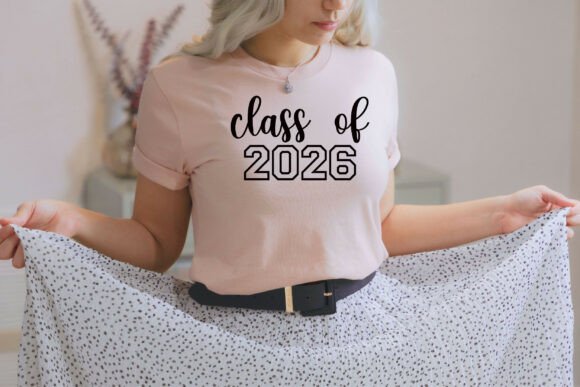
The design carries a clean, confident mood. It does not rely on excessive ornamentation or trendy flourishes that might date quickly. Instead, it presents a balanced composition that feels both celebratory and grounded. The lettering reads clearly at a distance, which matters for any piece meant to be worn or carried in social settings. The visual personality is direct without being rigid, professional without feeling cold. For a graduation-themed graphic, that is a tricky line to walk.
Built for Real Product Categories
Class of 2026 lands naturally in the T-Shirt Designs category, but its versatility extends far beyond basic apparel. I have tested this machine embroidery design across several product types, and it performs best when the fabric provides enough structure to support clean stitch registration. The layout works beautifully on sweatshirt fronts, tote bag panels, and apron bibs. It also translates well onto pillow covers and kitchen towels as a personalized gift for graduates entering their next chapter.
For Etsy sellers and small shop owners, this embroidery file offers strong listing potential. You can bundle it with graduation-themed design assets or offer it as a standalone digital embroidery file for customers who want to stitch their own finished products. The design reads clearly in printable mockup presentations, which helps when you need to show buyers exactly how the finished item will look before they commit to a purchase.
Sweatshirt and Apparel Performance
On a classic crewneck sweatshirt, Class of 2026 holds its shape without puckering. I recommend using a medium-weight cutaway stabilizer for knit fabrics, especially if the garment has any stretch. The design density is reasonable, so you do not get that stiff, board-like feel that cheap fill stitch patterns often create. The satin stitch elements, where they appear, have enough underlay to prevent the thread from sinking into fleece or terry cloth.
For custom apparel orders, this design gives you room to add a name, school year, or small decorative accent underneath without overcrowding the layout. I have tested it on both light and dark fabric backgrounds, and the thread color contrast remains readable as long as you choose your palette wisely. Avoid metallic or low-contrast thread combinations if the garment will see frequent washing. Stick with polyester or rayon threads that hold their color through multiple cycles.
Where Class of 2026 Shines Brightest
This design performs exceptionally well on structured items. Embroidered patch projects benefit from the clear outlines and moderate stitch density. If you sew patches onto denim jackets or canvas backpacks, Class of 2026 keeps its legibility even after the patch is trimmed and edge-finished. I have also used it on cap fronts and baseball hats, though you need to pay attention to hoop size and cap frame compatibility. The design does not have overly tall lettering that would wrap awkwardly around curved surfaces.
For baby embroidery or children's items, the design reads as a milestone piece rather than a formal announcement. It works well on a onesie or receiving blanket for a graduate-themed baby shower gift. Just keep in mind that tiny garments require a smaller hoop size, and you may need to scale the design carefully. Always test on scrap fabric first, especially when working with delicate knits or interlock cotton.
Holiday and Gift Applications
Graduation is a natural fit, but Class of 2026 also works for end-of-year celebrations, class reunions, and milestone birthday parties. I have stitched it onto kitchen towels as teacher appreciation gifts and onto pillow covers for dorm room decor. The design reads as handmade without looking amateur, which is a hard balance to achieve in commercial embroidery settings. When you sell finished products featuring this design, customers perceive the craftsmanship as thoughtful and intentional.
For holiday embroidery projects, you can pair the design with seasonal motifs like stars, confetti, or simple geometric borders. The layout leaves enough breathing room that adding a small decorative accent around the edge does not create visual chaos. That flexibility is valuable when you produce personalized gifts for multiple occasions throughout the year.
Use Cases That Require Extra Caution
Not every surface works well with Class of 2026. I have tested it on lightweight silk blends and thin rayon fabrics, and the result was disappointing. The stitch density, while moderate, still weighs down delicate textiles. You get visible pull lines and minor distortion around the lettering. For thin fabrics, either reduce the density in your software or switch to a running stitch outline version of the design if that option is available.
Stretchy fabrics like ribbed knits or jersey blends also require careful handling. Without proper stabilizer and hoop tension, the letters can distort and lose their crisp shape. I recommend a tear-away stabilizer for stable wovens and a cutaway for anything with more than 10% stretch. Test on a sample piece before committing to a production run.
Dark fabric presents another consideration. Class of 2026 relies on clear open areas between letterforms. If you stitch it on black or navy with a dark thread, the readability drops significantly. Use a light or bright thread color on dark backgrounds, and consider adding a white or light-colored underlay to prevent the fabric from showing through. This extra step adds time but improves the finished appearance dramatically.
Small Hoop and Detail Limitations
If you work with a small hoop size, scaling down Class of 2026 can cause the smaller letter details to blur together. The design was clearly built for standard hoop dimensions, and shrinking it below 70% of the original size risks losing the clean edges that make it appealing. For patches or small items like cap fronts, verify the file formats and hoop compatibility before you start. If your software allows density adjustments, you can compensate somewhat, but do not expect perfect results at very small sizes.
Practical Designer Notes Before You Stitch
Before you use Class of 2026 in any client project or craft business order, run through this checklist. First, test the design on scrap fabric that matches your final material. Check for thread breaks, skipped stitches, and registration shifts. Second, review the thread colors in your digitizing software. The design uses a limited palette, but you should confirm that the contrast works for your specific fabric color. Third, inspect the stitch density in the fill areas. If any section feels too dense for your fabric, adjust it in your software or switch to a lighter stabilizer.
Fourth, check your hoop size against the design dimensions. If the design exceeds your hoop capacity, you will need to resize or split the embroidery. Fifth, test the design in black and white mockups to evaluate contrast and readability. This step reveals whether the lettering reads clearly or gets lost in the background. Sixth, compare the design on light and dark fabrics to see how the thread pops or recedes.
Seventh, use the proper stabilizer for your fabric type. I cannot stress this enough. Even a well-digitized design fails on unstable fabric. Eighth, confirm the licensing terms before selling finished products or offering the design as a digital download. If the listing says you can use it for many purposes including monogram work, that is a good sign, but always read the specific terms provided with your purchase.
What Every Seller and Creator Should Know
If you are an Etsy seller or small shop owner, Class of 2026 fits well into your product lineup. You can offer it as a digital embroidery file for customers who stitch their own items, or you can sell handmade products featuring the design. Either way, the visual appeal and brand consistency of the piece help build customer trust. Buyers recognize clean embroidery work, and this design delivers that polished look without requiring excessive editing or re-digitizing.
For applique design enthusiasts, Class of 2026 can be adapted by using fabric applique for the letter bodies and satin stitch for the outlines. This approach reduces stitch time and gives the finished product a dimensional quality that thread-only embroidery does not match. Just make sure your applique fabric does not fray excessively, and use a fusible webbing to hold it in place during stitching.
When you present the design in your shop, use clear printable mockup images showing the design on different product types. Customers want to visualize how the embroidery will look on a tote bag versus a sweatshirt versus a cap. The more context you provide, the more confident buyers feel about their purchase. That confidence leads to better reviews, fewer returns, and higher customer loyalty.
Final Thoughts on Real Project Use
Class of 2026 is a reliable, well-constructed machine embroidery design that delivers clean results across a range of popular product categories. It works best on medium-weight woven and knit fabrics with proper stabilization. It handles commercial embroidery runs without excessive maintenance, and it presents well in both personal gift projects and small shop merchandise. The design does not try to do too much, and that restraint is exactly what makes it useful for real-world production.
Whether you are stitching a one-off tote bag for a family celebration or producing a batch of custom apparel for a boutique order, this design gives you a solid foundation. Test it, adjust it to your needs, and use it in ways that highlight its clean structure. With the right thread colors, stabilizer, and fabric choice, Class of 2026 becomes a dependable tool in your embroidery project library. That is the kind of design worth keeping in rotation season after season.